When specifying glass for windows, doors, or facade systems, you will encounter three terms repeatedly: tempered, laminated, and insulated. They sound similar, they look similar — but they serve fundamentally different purposes. This guide explains what each type is, how it performs, and when to use it.
Why Glass Type Matters
Glass is not just glass. The type you choose directly determines:
· Safety — what happens when the glass breaks?
· Thermal performance — how much heat passes through?
· Sound insulation — how much noise gets in?
· Security — can someone break through it?
· Cost — both upfront and long-term energy savings
Choosing the wrong type can mean code violations, uncomfortable interiors, or safety hazards. Choosing the right type means decades of performance with minimal maintenance.
The Three Types Explained
1. Tempered Glass (Toughened Glass) — Safety Glass
How it is made: Annealed (standard) glass is heated to approximately 650°C and then rapidly cooled by air jets. This process creates compressive stress on the surface and tensile stress in the core — making the glass 4 to 5 times stronger than ordinary glass of the same thickness.
How it breaks: When broken, tempered glass shatters into small, blunt-edged granules rather than sharp shards. This dramatically reduces the risk of laceration injuries — which is why building codes require tempered glass in doors, sidelights, and areas near floor level.
Strengths:
· High impact resistance — 4-5x stronger than annealed glass
· Safe breakage pattern — small blunt fragments, no dangerous shards
· Good thermal shock resistance — withstands temperature differentials up to ~250°C
· Most affordable of the three safety glass types
Limitations:
· No thermal insulation — single pane U-value is ~5.8 W/m²·K (very poor)
· No sound insulation improvement over standard glass of same thickness
· Cannot be cut, drilled, or edged after tempering — all fabrication must be done first
· Once broken, the entire pane disintegrates — no residual barrier
Typical STC rating: ~31-33 dB (6mm single pane)
2. Laminated Glass — Security & Safety Glass
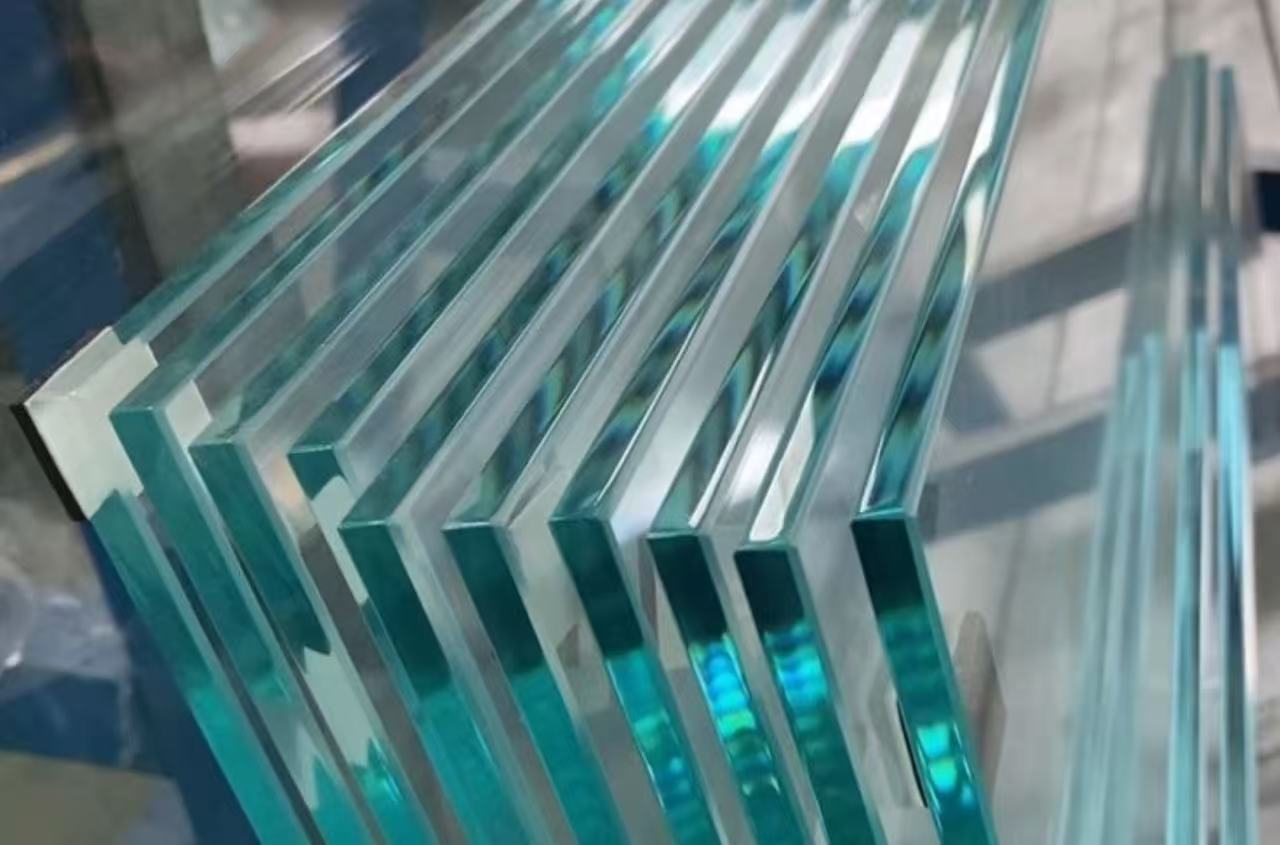
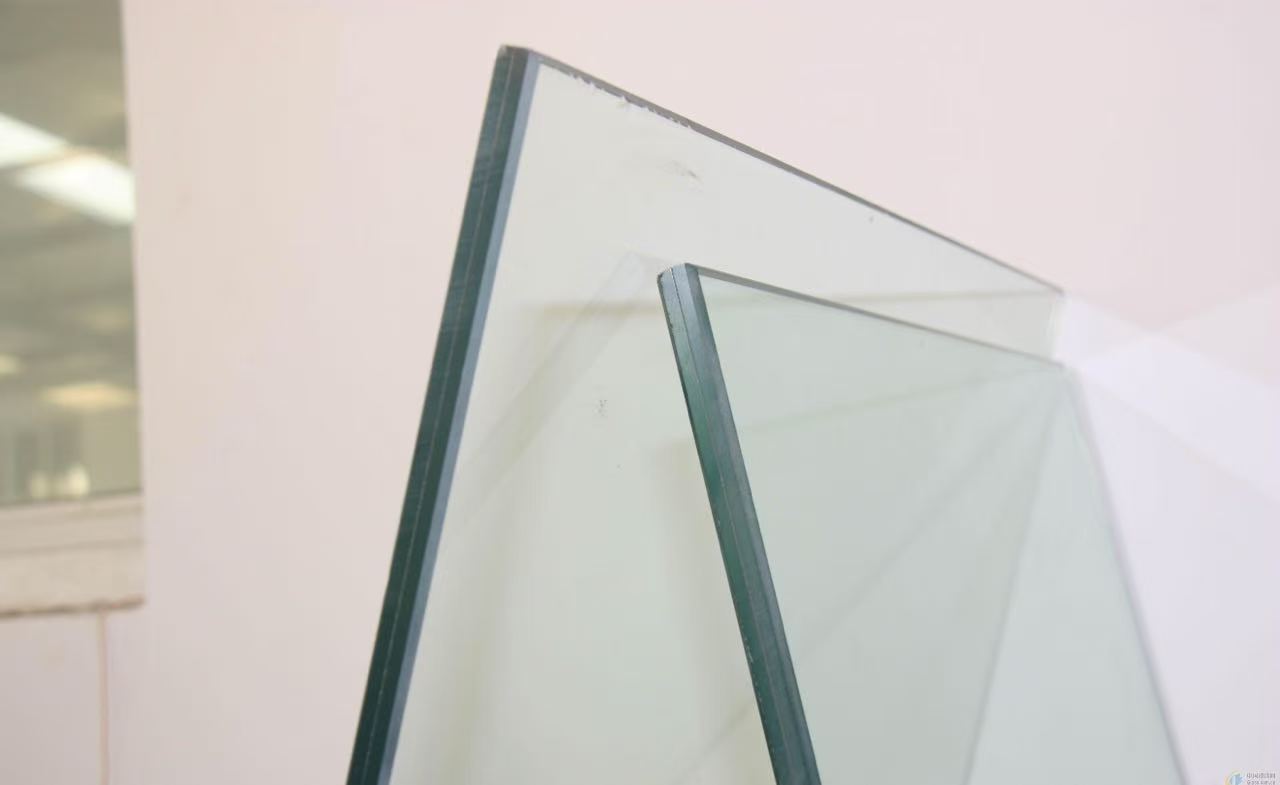
How it is made: Two or more glass layers are bonded together with a transparent plastic interlayer — typically PVB (polyvinyl butyral) or SGP (SentryGlas Plus) for higher-strength applications. The assembly is processed through heat and pressure in an autoclave, creating a permanent bond.
How it breaks: When impacted, the glass may crack, but the interlayer holds the fragments in place. The pane remains intact in its frame — no falling glass, no opening for intrusion. This is why laminated glass is mandatory for automotive windshields and overhead glazing.
Strengths:
· Security — resists forced entry; glass stays in frame even when broken
· UV protection — blocks up to 99% of harmful UV rays, protecting interiors from fading
· Sound damping — the PVB interlayer absorbs vibrations, reducing noise transmission
· Can be cut and drilled after manufacturing (unlike tempered glass)
· Available in tinted, colored, or patterned interlayers for design flexibility
Limitations:
· Higher cost than tempered glass — typically 50-100% premium
· Slightly heavier due to multiple layers
· Thermal insulation is still poor as a single laminated unit — U-value ~5.3 W/m²·K
· PVB interlayer can yellow over decades in high-UV environments (mitigated with UV-stable interlayers)
3. Insulated Glass (Double/Triple Glazing / IGU) — Thermal Performance Glass
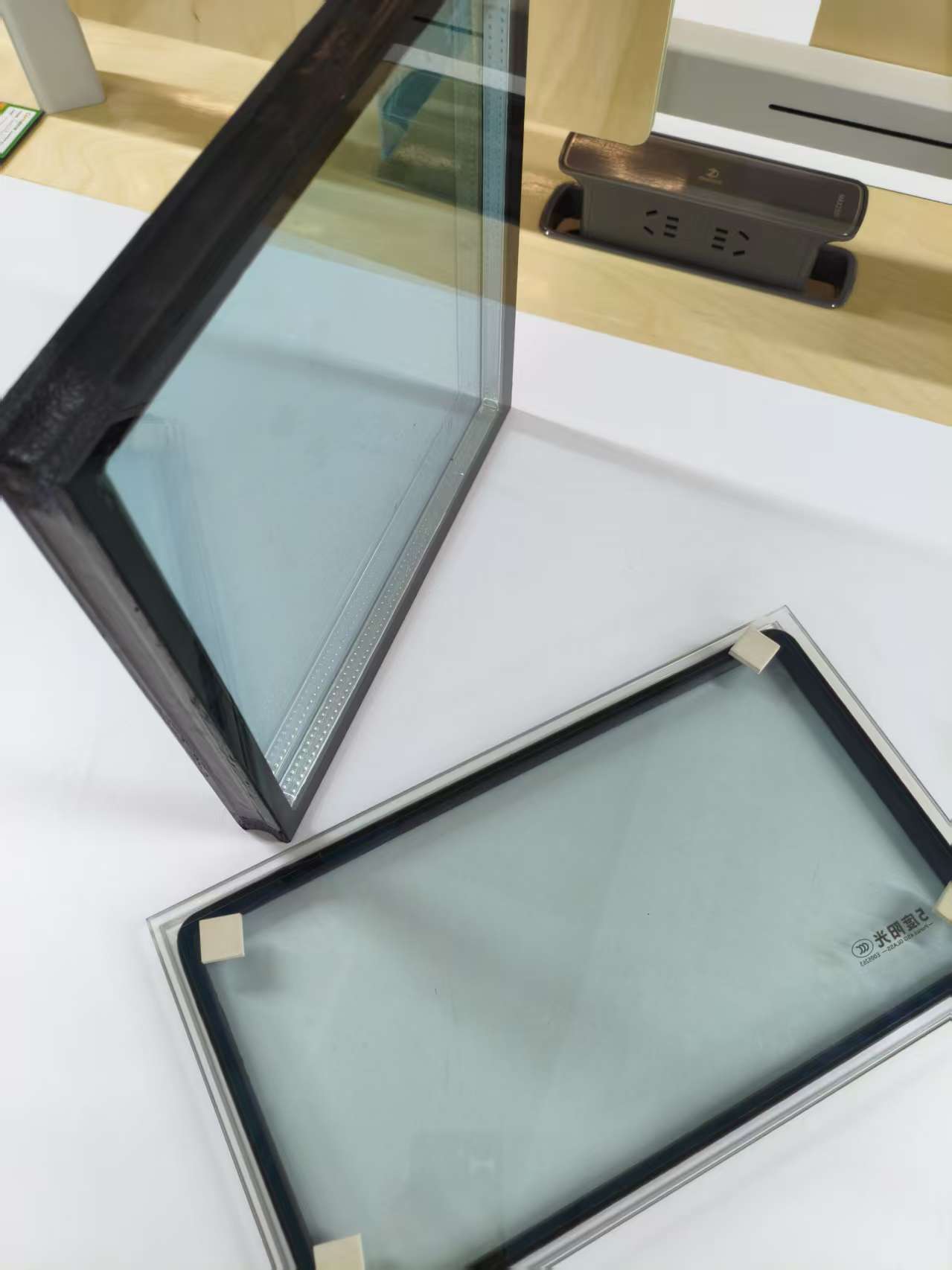
How it is made: Two (or three) glass panes are separated by a sealed spacer bar, creating a hermetically sealed air or gas-filled cavity between them. The cavity is typically 6-20mm wide and may be filled with argon or krypton gas for enhanced thermal performance. The entire unit is sealed with dual barriers (primary butyl seal + secondary polysulfide/silicone seal).
How it works: The trapped gas layer acts as a thermal barrier, dramatically reducing heat transfer. Standard double glazing cuts the U-value from ~5.8 (single pane) to 2.8-3.2 W/m²·K. Adding a Low-E coating and argon fill can bring it down to 1.6-2.0 W/m²·K — a 65-70% improvement.
Strengths:
· Excellent thermal insulation — reduces heating and cooling costs by 30-50%
· Moderate sound insulation — STC ~34-36 dB for 6+12A+6 configuration
· Reduces condensation on interior glass surface
· Can combine with tempered or laminated panes for safety + insulation
· Compatible with Low-E coatings for solar heat control
Limitations:
· Higher upfront cost than single-pane glass
· Heavier and thicker — requires stronger frames
· Seal integrity is critical — if the seal fails, moisture enters the cavity and fogs the glass permanently
· Cannot be modified after manufacturing — exact sizes required at order time
Typical U-value: 1.6-3.2 W/m²·K (double glazing with Low-E + argon)
Side-by-Side Comparison
· Primary Purpose: Tempered = Safety (impact resistance) | Laminated = Security & UV/sound | Insulated = Thermal insulation
· Strength vs Annealed: Tempered = 4-5x stronger | Laminated = Similar to annealed | Insulated = Depends on pane type
· Break Pattern: Tempered = Small blunt granules | Laminated = Cracks but stays in frame | Insulated = Varies by pane type
· Thermal Insulation (U-value): Tempered = ~5.8 W/m²·K (poor) | Laminated = ~5.3 W/m²·K (poor) | Insulated = 1.6-3.2 W/m²·K (excellent)
· Sound Insulation (STC): Tempered = ~31-33 dB | Laminated = ~38-39 dB (best single unit) | Insulated = ~34-36 dB
· UV Protection: Tempered = None (standard) | Laminated = Up to 99% blocked | Insulated = Depends on coating
· Security (anti-intrusion): Tempered = Low (shatters on impact) | Laminated = High (stays in frame) | Insulated = Medium (depends on panes)
· Relative Cost: Tempered = Lowest (baseline) | Laminated = +50-100% over tempered | Insulated = +100-200% (with Low-E + argon)
· Can Be Cut After Production? Tempered = No | Laminated = Yes | Insulated = No
· Lifespan: Tempered = 25+ years | Laminated = 20-25 years (PVB aging) | Insulated = 15-25 years (seal dependent)
Can You Combine Them? Yes — And You Often Should
The three glass types are not mutually exclusive. In fact, most high-performance window and facade systems use combinations to achieve multiple performance goals simultaneously:
· Tempered + Insulated (Tempered IGU): Both panes are tempered for safety, with an argon-filled cavity for insulation. Ideal for high-rise residential windows, commercial facades, and areas with building code safety requirements. Best balance of safety + thermal performance at moderate cost.
· Laminated + Insulated (Laminated IGU): One pane is laminated (usually the interior lite for security), the other is standard or tempered, with a sealed cavity between. Provides security, sound insulation, UV protection, AND thermal insulation. The premium choice for luxury projects, hurricane zones, and noise-sensitive urban locations.
· Tempered + Laminated + Insulated (Triple Combination): Maximum performance — tempered outer pane for weather resistance, laminated inner pane for security and sound, with Low-E coating and argon fill for thermal efficiency. Specified for high-end commercial curtain walls, embassy-grade security glazing, and extreme climate applications.
CONSMOS Glass Capabilities
At CONSMOS, we manufacture all three glass types — and their combinations — in our integrated production facility. This means you can source aluminum profiles and matching glass from one supplier, ensuring system compatibility and reducing procurement complexity.
· Tempered Glass: Clear, tinted (gray/bronze/blue/green), low-iron (ultra-clear). Thickness: 3mm - 19mm.
· Laminated Glass: Clear + PVB, tinted, colored interlayer, tempered laminated. Thickness: 3+3, 4+4, 5+5, 6+6, 8+8 (mm + PVB + mm).
· Insulated Glass (IGU): Double/triple glazing, argon fill, Low-E coating, warm-edge spacers. Thickness: 4+9A+4 to 12+27A+12 (configurable).
· Combinations: Tempered IGU, Laminated IGU, Low-E Laminated IGU. Custom configurations per project.
All glass products are manufactured to international standards and can be paired with our aluminum profile systems for complete window, door, and curtain wall solutions.
Tell us about your project — climate, application, budget, and performance requirements. Our team will recommend the optimal glass configuration and provide a quotation.